
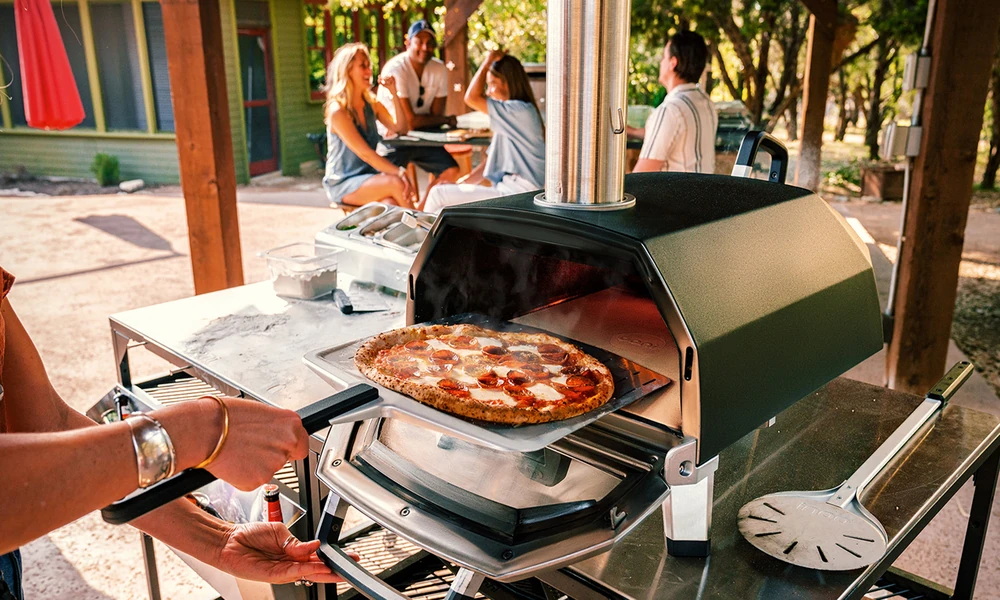
The first pizza out of a new oven tends to decide how often the thing gets used. If it took an hour of fire-tending to get there, some owners light it every Friday and love the ritual, while others quietly let it collect pollen on the patio. If it took a quarter of an hour and the turn of a dial, like a typical electric pizza oven, it might come out on an ordinary Tuesday. Choosing a home pizza oven comes down to how, where and how often you actually cook, and the fuel type follows from those answers.
Every style can make a great pie. Electric, gas, wood and pellet ovens differ in heat, setup, flavor and the attention they ask for, and those differences show up most on a busy weeknight. A few practical questions make it easier to pick an oven that suits your kitchen, your yard and your patience.
How Hot Does a Home Pizza Oven Need to Get?
A standard kitchen oven usually tops out somewhere around 500 to 550°F. Dedicated high-heat pizza ovens go much further, with many models reaching roughly 700 to 950°F. That extra heat is what makes a thin Neapolitan-style pie possible: at around 800 to 900°F the crust puffs and blisters while the cheese melts, and the pizza is done in about a minute and a half.
Plenty of styles prefer less. New York-style and thicker pan pizzas often bake better somewhere in the 550 to 700°F range, where the bottom has time to crisp before the toppings scorch. A good oven holds a moderate temperature as comfortably as a blazing one, so think about the pizza you make most often before chasing the biggest number on the box.
The stone matters as much as the air temperature. Most ovens use a cordierite or similar ceramic baking stone, and it has to soak up heat before it can cook the base properly. An infrared thermometer pointed at the stone tells you far more than the dial on the front.
Is an Electric Pizza Oven Hot Enough for Neapolitan-Style Pizza?
Some are. The newer high-heat countertop models can reach the 750 to 850°F range, which is close enough to Neapolitan conditions for a pie that cooks in about two minutes. The appeal is control: separate top and bottom heating elements, a thermostat that holds steady and no fuel to manage. Indoor models also mean pizza night doesn’t depend on the weather.
Power is the practical limit. Many indoor countertop units draw about 1,800 watts from a standard 120-volt household outlet, which can max out a typical 15-amp circuit. Running a kettle or toaster on the same circuit at the same time can trip the breaker, so it helps to know which outlets share a circuit before you settle on a spot. The best electric pizza oven for a small apartment is often the one that fits the counter depth and the wiring already in place.
An electric outdoor pizza oven solves a different problem. It brings patio cooking without propane tanks or smoke drifting toward a neighbor’s window, which is handy on balconies and in communities where rules may limit open flames. Look for a unit rated for outdoor use, plug it into a weather-protected outlet with ground-fault protection, and read the manual on storage, because some models are meant to be carried inside after cooking.
How Do Gas and Wood-Fired Ovens Compare on Flavor and Effort?
Gas ovens are the easy road to high heat outdoors. Most portable models run on propane and reach cooking temperature in roughly fifteen to twenty-five minutes, with a dial that lets you turn the flame down for a gentler bake. The flavor is clean, and the main skill to learn is rotating the pie, since the side nearest the flame cooks faster.
A wood-fired home pizza oven asks for more attention and gives back character. A small portable wood burner heats faster than a masonry dome, which may need an hour or more before the floor and walls are fully saturated with heat. You manage the fire by feeding in splits, and the reward is the faint smoky edge and leopard-spotted crust many people consider the real thing.
Pellet ovens sit in between. They burn compressed hardwood pellets from a hopper, so you get some wood flavor with less mess, though the fire still needs topping up and the flame can sag if the feed runs low. Multi-fuel ovens accept wood, charcoal or pellets and sometimes an optional gas burner, letting one oven grow with the cook.
What Should You Compare Among Pizza Ovens for Sale?
Once the fuel type is settled, pizza ovens for sale in any category start to look alike on paper. There is no single best pizza oven for everyone, and the right choice for a family that bakes once a month looks very different from the right choice for someone feeding a dozen friends every Saturday. A few practical details separate one model from another in daily use:
- Footprint and weight: measure your counter or outdoor table and allow the clearance from walls and combustibles the manual calls for.
- Opening and stone size: these set the largest pie you can make and how much room you have to turn it.
- Insulation: thicker walls hold heat between pizzas and keep the outer shell cooler.
- Heat-up time: a long preheat quietly decides whether the oven gets used midweek, which is where an electric pizza oven often wins.
- Replacement parts and warranty: stones crack and burners wear over years of use.
Cost tracks these factors: thicker insulation, larger stones, heavier bodies and dual-fuel burners all add to the price. An oven that lives outside all year also needs a fitted cover.
Can a Standard Kitchen Oven Still Make Great Pizza?
Yes, a standard kitchen oven can make very good pizza, especially pan, Detroit-style and New York-style pies, as long as it is fully preheated with a stone or steel inside. For many households, the best home oven for pizza is the range already in the kitchen, set to its highest temperature for forty-five minutes to an hour so the stone soaks up heat. A dedicated pizza oven adds speed, char and often the pleasure of cooking outdoors, and it makes the most sense once you are making pizza often enough to want more than the range can give. Match the fuel to your schedule and the heat to the style you love, and the oven will earn its place.