
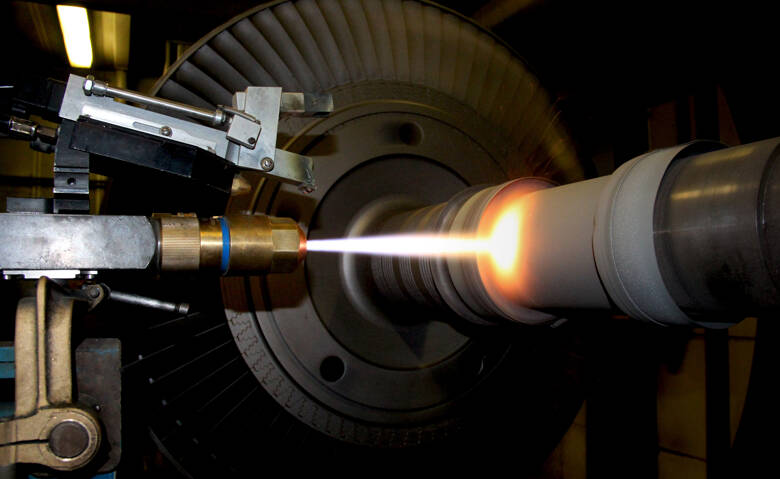
For decades, hard chrome plating was considered the ultimate surface treatment, giving machine parts a polished finish and decent wear resistance. But the world of industrial engineering is changing fast. Environmental restrictions, evolving material demands, and the need for longer-lasting coatings have pushed industries to seek better alternatives. And that’s where HVOF coating (High-Velocity Oxy-Fuel) is quickly taking center stage.
Across sectors like aerospace, oil and gas, automotive, and heavy machinery, thermal spray coating services are setting a new benchmark for precision and durability. Let’s explore why industries in India and beyond are switching from chrome to HVOF and why this advanced surface engineering solution is here to stay.
The Chrome Plating Problem
Chrome plating once defined surface protection, offering a mirror-like finish and reasonable hardness. But it came with serious drawbacks. Traditional hard chrome plating involves hexavalent chromium, a toxic compound that poses environmental and health hazards. Stricter global regulations — including those under REACH and EPA — have made compliance costly and complex.
Beyond environmental risks, hard chrome plating also suffers from limited wear resistance, microcracking, and poor corrosion protection in extreme operating conditions. Components exposed to high temperatures, pressure, or abrasion tend to degrade faster, leading to costly replacements and downtime.
In short: chrome has had its time. Industries now demand coatings that perform better, last longer, and meet sustainability standards.
Enter HVOF Coating — The Game Changer
HVOF coating companies are leading a technological leap in surface finishing. The process involves the combustion of fuel and oxygen to create a supersonic jet that propels powder particles toward the substrate at extremely high speeds. The result is a dense, strongly bonded coating that outperforms chrome in nearly every metric.
Unlike electroplating, HVOF thermal spray services don’t rely on chemical baths or heavy metal waste. The coating process is mechanical and controlled, ensuring consistent results across complex geometries — from turbine shafts to hydraulic rods and pump sleeves.
Why HVOF Outperforms Hard Chrome
1. Superior Hardness and Wear Resistance: HVOF coatings — especially tungsten carbide and chromium carbide blends — achieve hardness levels well above chrome. They offer exceptional resistance to erosion, abrasion, and fretting, even in high-load environments.
2. Enhanced Corrosion Protection: Because HVOF produces extremely dense coatings with minimal porosity, the surface resists moisture and chemicals far better than plated chrome. Components in marine, oilfield, and chemical industries benefit significantly from this added protection.
3. Environmentally Sustainable: No toxic effluents, no harmful chromium waste — just precision engineering. The environmental advantage alone has made thermal spray coating in India a preferred option for eco-conscious manufacturers looking to meet global compliance standards.
4. Better Adhesion Strength:With bond strengths often exceeding 80 MPa, HVOF coatings adhere tightly to substrates. That means no peeling, no flaking, and far less risk of premature failure compared to traditional coatings.
5. Precision and Versatility HVOF technology can be tailored for specific applications — from restoring worn parts to creating ultra-smooth finishes for aerospace and energy components. Its versatility makes it ideal for industries where downtime is expensive and tolerances are tight.
India’s Growing Adoption of Thermal Spray Coatings
The rise of thermal spray coating services in India reflects a larger industrial evolution. Sectors like power generation, hydraulics, and mining are embracing HVOF as a standard practice. Local manufacturers are investing in advanced spray systems and robotic arms capable of delivering micron-level accuracy and repeatability.
In the past, high-performance coatings were often imported or outsourced. Today, Indian facilities are matching global standards, offering in-house HVOF and plasma spray capabilities. This not only reduces turnaround time but also strengthens the country’s self-reliance in precision engineering.
HVOF as a Hard Chrome Replacement
Many OEMs are now officially approving HVOF as a hard chrome replacement for critical parts like landing gear, rollers, hydraulic pistons, and compressor components. The shift is driven by three core benefits — performance, longevity, and compliance.
While chrome coatings may start to degrade at 400 °C, HVOF coatings maintain structural integrity well beyond those temperatures. Their dense microstructure minimizes crack propagation and provides consistent performance even under thermal cycling or chemical exposure.
In maintenance and repair operations (MRO), HVOF also enables component reclamation — restoring worn surfaces to their original dimensions without full replacement. That translates directly to lower costs and reduced waste.
Future of Surface Engineering
As manufacturing evolves toward smarter, cleaner technologies, HVOF coating companies are investing heavily in R&D to refine coating materials and deposition techniques. Hybrid coatings combining carbides and metallic binders are pushing hardness and corrosion limits further.
In coming years, expect to see thermal spray coating in India integrated into additive manufacturing workflows, advanced robotics, and predictive maintenance systems. From wind turbine shafts to aerospace bearings, HVOF is set to redefine how surfaces are protected and how performance is measured.
“The industry’s shift from chrome plating to HVOF coating isn’t just a trend — it’s a transformation. With higher wear resistance, stronger adhesion, and zero toxic discharge, HVOF thermal spray services deliver the performance modern industries demand.
As sustainability and efficiency become non-negotiable, thermal spray technologies are leading the next phase of industrial innovation helping businesses protect components, extend equipment life, and meet global environmental goals all at once.”